
Are you facing patient attrition in your healthcare practice?
Most of the ambulatory services provider will acknowledge the fact of patient attrition. It is a common phenomenon in the healthcare domain.
However, with a robust strategy and implementing a Patient Loyalty Program, you can reduce Patient Attrition and Maximize Patient Retention. Initially, healthcare organizations or ambulatory services need to determine the rate, reasons, and factors associated with patient attrition.
And after figuring out the loopholes, one can plan to retain the patients. Preventing unnecessary attrition is essential because it impacts both the practice and the financial bottom line.
Let’s discuss the seven tips that help in reducing patient attrition:
Regular Communication with the Patients
Communicating with patients is mandatory regularly. It builds a good connection between the patients and the healthcare practices. Keeping patients up-to-date with new information is a great way to keep them interested and engaged in your practice.
You can also send a newsletter, case studies, latest achievements, inviting for seminars, wishing on birthdays, and many more. Patients with a vested interest have a higher chance of staying loyal to your brand.
Send Appointment Notifications to the Patients
Due to a hectic schedule and the daily hustle of life, patients may forget or miss necessary appointments. It is important to send notifications to patients so that they know about their upcoming visit.
Notifications could be in the form of an email, a text message, phone calls, etc. This act showcases your concern in terms of taking care of your patients.
The visual model below maps out how your patient recall data flows from initial appointment activity to final retention milestone in our platform.
View Diagram 01: Patient retention cohort progression and automated appointment recall schedule
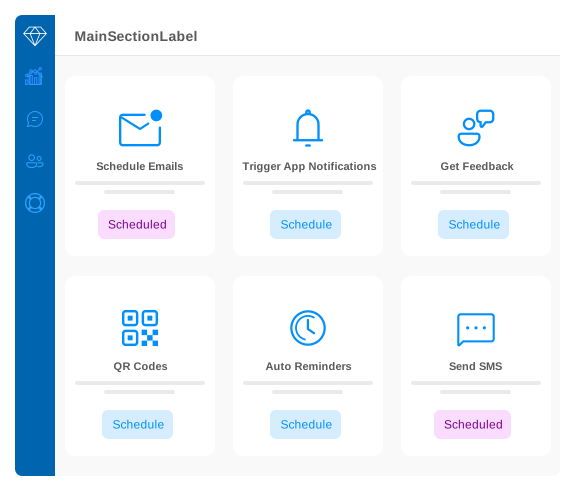
Cohort progression moving patients from first-visit follow-up through 6-month preventive recall alerts and loyalty recognition. View Diagram 02: Patient retention cohort progression and automated appointment recall schedule – Stage Audit View

Secondary workflow diagram illustrating how your operations team audits each verification gate prior to reward release. Convenience in Transportation
It may be the case that your healthcare organization is located in such an area that the patients might find it a bit inconvenient to visit. They may have a difficult time getting to the healthcare unit.
In this scenario, it would be a good idea if you offer transportation services to them. This facility would ease out the situation, and the patients will feel free to book an appointment next time.
Flexible Office Hours
An emergency can emerge anytime. Patients may need treatments beyond the standard 9-5 office hours. Thus, it is of great importance to maintain flexible office hours.
To see how structured wellness incentives reinforce your recall schedule, read 7 reasons why your practice needs a patient loyalty program and explore our automated retention solutions for local service practices.
If your healthcare unit operates on flexible hours, you’ll have a significant advantage of retaining patients and reducing unnecessary attrition.
Good Customer Service
Good customer service always helps in preventing patient attrition. To improve the customer service experience, always find paths to be excellent. Investing adequate time and money to build a top-class customer service system will boost patient retention.
In a quality Patient Loyalty Program, there are various features and functionality on attending the patients and giving them a better experience.
Improve the Process
Operations in a healthcare organization must be devoid of complexity. Patients should not feel inconvenience to avail of your service. For booking appointments, you may try to get in as many patients as possible but try to be realistic and accurate so that it does not consume too much of the patient’s time.
If patients have any queries about anything, provide a solution to them promptly. It is vital to streamline the process in a healthcare organization for the sake of patient retention. Implementing a quality Patient Loyalty Program in the business ecosystem helps in a better patient retention strategy.
Identify Possible Issues
The organizations need to be proactive to find loopholes in their healthcare unit or ambulatory services. Looking into potential problems is a crucial way to improve patient retention.
Medical centers should be on the lookout for common warning signs that indicate patient attrition and solve any issues before it is too late.
Patient retention is almost equivalent to limiting patient attrition. If you notice some of your patients are not returning to your healthcare practice, find out why.
How NextBee can help to reduce the patient attrition rate?
NextBee offers an all-purpose software platform that is capable to run various programs at a single time. Healthcare units and hospitals can seamlessly use this solution to reduce patient attrition and increase overall revenue.
Ask for patient feedback and suggestions, and make sure to apply them for better customer care. Anything that needs change for betterment shall improve to make patients more willing to come back.
Operational Playbooks for Reducing Patient Attrition
Use this privacy-safe communication checklist, clinic retention ROI model, and 180-day recall timeline to keep patients active on their care plans.
What privacy and consent controls are required for automated patient recall messages?
Protect patient privacy across automated SMS and email recall flows by enforcing four operational safeguards: capture explicit TCPA and communication opt-in at intake, omit sensitive diagnostic details from lock-screen text notifications, log one-tap STOP requests immediately, and restrict reward triggers to appointment attendance metadata.
Your Privacy-Safe Patient Recall and Loyalty ChecklistWe keep your automated appointment reminders, satisfaction surveys, and wellness milestones separate from sensitive clinical chart notes.
- Explicit Intake Channel ConsentLogs patient preference for SMS, email, or voice reminders during registration with full audit timestamps.
- Zero-Diagnosis Notification TemplatesSends appointment date, clinic location, and portal links without exposing clinical conditions on phone screens.
- Instant Opt-Out SynchronizationProcesses SMS STOP replies and email unsubscribes in real time across all clinic outreach queues.
- Attendance-Only Milestone TrackingAwards wellness points from verified check-in status IDs rather than protected treatment records.
Our communication checklist enforces template and opt-in rules supplied by your compliance lead and does not establish legal HIPAA certification. Review our security and loyalty platform features →How much clinic revenue does reducing annual patient attrition by 15 percent recover?
Calculate your patient retention ROI from preserved annual visit value and reduced no-show slots. In a practice with 2,000 active patients averaging $450 in annual care value, cutting annual attrition from 25 percent to 10 percent retains 300 patients and $135,000 in annual billings.
Your Clinic Patient Attrition Recovery EconomicsWe quantify the annual care value retained and empty chair hours prevented when automated recall cadences reduce patient drop-off.
Practice Retention Input Unmanaged Attrition Baseline Automated Recall Formula Annual Clinic Impact Annual Patient Panel Churn 25% of 2,000 patients (500 lost) Automated 6-month recall cuts churn to 10% (200 lost) 300 patients retained / yr Retained Care Plan Billings $450 average annual value / patient 300 retained patients x $450 annual care value +$135,000 gross billings Last-Minute No-Show Rate 14% unconfirmed appointment slots Two-way SMS confirmation 48h and 4h prior to visit Cut no-shows under 5% Under those assumptions, our model calculates retained billings from your supplied panel size rather than promise guaranteed clinical volume. Model your patient retention strategy ROI →How should your clinic sequence patient touchpoints between appointments to prevent lapse?
Run a structured four-step touchpoint cadence between visits so patients never go six months without hearing from your clinic: send a 24-hour post-visit care check, deliver a 30-day wellness tip, trigger a 150-day recall booking link, and escalate 180-day overdue accounts.
Your 180-Day Patient Recall and Retention TimelineWe automate post-visit feedback, mid-cycle wellness check-ins, and 6-month recall scheduling prompts across your patient panel.
Step 01 · 24h Post-Visit · Care Desk1. Post-Visit Check-InSend digital aftercare instructions and a 1-tap satisfaction pulse survey via SMSStep 02 · Day 45 · Patient Engagement2. Preventive Wellness TipShare seasonal preventive care content and award points for completing health profile preferencesStep 03 · Day 150 · Scheduling Sync3. Recall Booking PromptDeliver a personalized 6-month checkup booking link with priority morning or evening slot optionsStep 04 · Day 195 · Front-Desk Outreach4. Overdue Care RescueFlag unbooked patients in your reception queue for a personal check-in call and return incentiveOur recall timeline triggers from appointment dates supplied by your scheduling software and does not modify clinical treatment protocols. See our at-risk lapse and retention workflows →For more inputs and exciting suggestions, feel free to contact NextBee. We specialize in developing a top-notch Patient Loyalty Program that drives high-quality referrals and increases patient retention.