Word of mouth is often treated like weather: welcome when it arrives, impossible to schedule. That view leaves a lot on the table. People talk about brands for predictable reasons, and most of those reasons can be designed into a customer’s experience.
This guide explains what actually gets customers talking and covers word-of-mouth marketing strategies you can put on a calendar. It also shows how to measure results, even when most conversations happen out of sight.
Key insights
- People share moments, not features. A surprising experience travels further than a spec sheet.
- Ease decides whether sharing happens. A link, a code or ready-made words remove the friction.
- Timing turns goodwill into action. The best time to ask is right after a customer feels delighted.
- Community sustains it. Customers who feel part of something keep talking long after launch.
- You can measure more than you think. Tracked links, simple surveys and branded search fill in the picture.
In this article
I. What actually makes people talk
II. Seven strategies you can plan
I. What Actually Makes People Talk
Effective word-of-mouth marketing strategies start with understanding why people talk. Word of mouth rarely comes from asking customers to “spread the word.” It comes from four ingredients. When one is missing, sharing slows down. A customer advocacy platform can supply several of them at once, but it helps to understand each one first.
A. A moment worth sharing
People talk about experiences that surprise them. A handwritten note, an unexpectedly fast fix or a small extra in the box gives customers something to tell. Ordinary service, however good, rarely gets mentioned.
Plan it: pick one point in the customer journey and make it memorable on purpose.
B. An easy way to share
Many customers would recommend you if it took ten seconds. Few will if it takes ten minutes. Personal links, simple codes and pre-written messages turn a vague intention into an actual share.
Make sure every customer can share with one tap from the channels they already use.
C. A reason to share now
Goodwill fades. A launch, a limited-time bonus or a milestone gives customers a reason to act today rather than someday.
Build a calendar of moments that give customers a natural prompt to talk.
D. A story people can repeat
If a customer can’t explain what makes you different in one sentence, they won’t. A clear, simple story, such as a founding purpose or a signature feature, is easy to pass along.
Test whether customers can describe you in one sentence, and simplify until they can.
Why word of mouth stalls
Diagnosis view
What you notice Missing ingredient First fix Happy customers, but few mentions A moment worth sharing Design one surprise into the journey Customers say they’d recommend, but don’t An easy way to share Add personal links and ready-made messages Sharing spikes at launch, then fades A reason to share now Plan recurring prompts through the year Referrals arrive confused about what you do A story to repeat Sharpen your one-sentence story Most stalled word of mouth programs trace back to one missing ingredient. Fix that one before adding new tactics.
II. Seven Word-of-Mouth Marketing Strategies You Can Plan
Each of these word-of-mouth marketing strategies builds on the four ingredients above. Together, they turn occasional recommendations into a steady source of new customers.
A. Design one signature moment
Choose a single point where you can exceed expectations, such as unboxing, onboarding or the first support call. Make it consistent, so every customer gets it, not just a lucky few. Consistency is what turns a nice gesture into something people talk about.
B. Give customers the words and the link
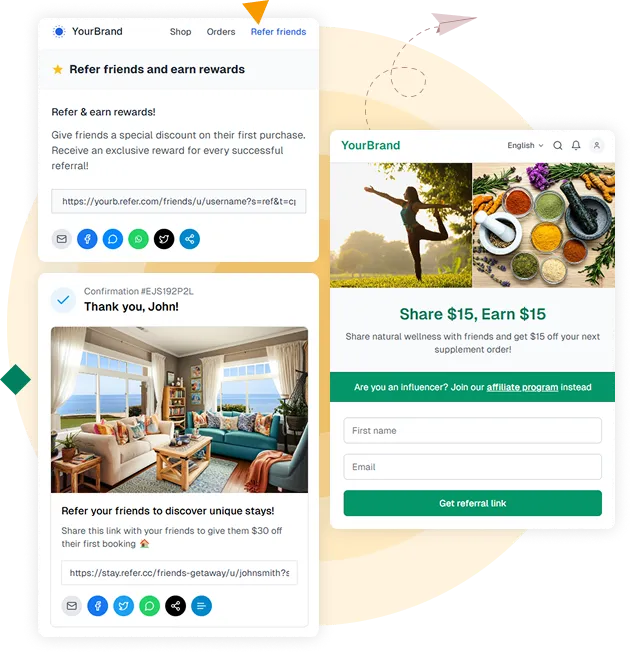
Offer a short, editable message customers can send to a friend, plus a personal link that tracks the result. Customer referral software creates these links automatically, so you can see which conversations lead to new customers.
C. Ask at the moment of delight
Watch for the moments customers feel best about you: after a great review, a milestone or a problem solved quickly. Invite them to share right then, when enthusiasm is highest.
D. Reward both sides of a recommendation
When a friend benefits too, sharing feels generous rather than self-serving. A credit for the customer and a welcome offer for the friend is a simple pairing. We explain the approach in our piece on double-sided referral rewards.
Give your biggest fans the tools to talk about you
Our brand ambassador platform gives each ambassador a personal storefront, pre-approved content templates and tracked referral links. Missions, tiered rewards and leaderboards keep them sharing long after launch, and every share is tracked back to results.
E. Launch with insiders first
Invite loyal customers to try new products or features before anyone else. Early access makes people feel valued, and insiders often become the first voices talking about a launch.
F. Equip fans and creators on social media
Some customers love creating content. Give them clear briefs, branded assets and simple ways to post. A social media marketing platform can manage these campaigns and track which posts drive results. If they’re rewarded, ask them to disclose it in each post.
G. Build a community that keeps talking
Forums, member groups and events give customers a place to share tips and stories with each other. A strong community keeps conversations going between campaigns. Our guide to advocacy programs that support marketing covers how to structure one.
III. How to Measure Word of Mouth
Measuring word-of-mouth marketing strategies takes a different approach. A lot of word of mouth happens offline or in private messages, so you’ll never see all of it. But a few signals give you a clear enough picture to make decisions.
Tracked referral links: new customers who arrive through a personal link or code.
“How did you hear about us?”: a single question at sign-up or checkout, with “a friend or colleague” as an option.
Branded search: how often people search for your brand name over time.
Social mentions: posts and comments that name your brand.
Review volume: new reviews each month, which often rise with word of mouth.
Look at these together rather than alone. When several move in the same direction after a campaign, word of mouth is likely at work.
IV. The Verdict on Word-of-Mouth Marketing Strategies
Word of mouth isn’t luck. It’s the result of moments you design, tools you provide and timing you control.
Create one moment worth sharing. Make sharing effortless. Ask when customers are happiest. Give them a simple story to repeat, and a community to repeat it in. Plan these word-of-mouth marketing strategies the way you plan any campaign, and recommendations stop being a happy accident.
If you want to read moreSetting goals for an advocacy program
How to connect customer advocacy to targets your business already tracks.