A QR code is a small square with a big job. It links a real-world moment to everything you can offer online. That moment might be a product in someone’s hand, a sign in a store or a booth at an event. A well-planned QR code marketing campaign turns that scan into a sign-up or a purchase. Better still, it creates a returning customer you can recognize next time.
This guide covers eight campaign ideas, each split into where the code lives offline and what happens after the scan online. It also covers design, security and tracking, so your codes are easy to use, safe to scan and measurable.
Quick Tip
Put codes where customers already pause, and tell them exactly what they’ll get. Send them to a fast mobile page, and connect every scan to a customer profile. The scan is only the start. What happens next is what makes a QR code marketing campaign pay off.
What Makes a QR Code Marketing Campaign Work
Most weak QR campaigns share the same problems. The code has no clear reason to scan, it sends people to a generic homepage or nobody tracks what happens afterward. Strong campaigns fix all three.
A clear reason. “Scan for 100 bonus points” beats a code with no explanation.
A focused destination. A page built for that moment, not your homepage.
A connected profile. Each scan links to a customer you can recognize and reward later.
That last point is where an omnichannel engagement platform helps. It ties each scan to the same customer record your email, app and store teams use. The offline moment then becomes part of an ongoing relationship.
8 QR Code Marketing Campaign Ideas
Each QR code marketing campaign idea below shows the offline placement on the left and the online experience on the right.
1. Packaging that keeps the conversation going
Your packaging reaches every customer who buys. A code on the box or label can offer setup videos, recipes, product registration or a fast way to reorder.
Offline: on the box, label or insert card, next to a short prompt.
Online: a how-to page, registration form or one-tap reorder, with loyalty points for signing up.
2. In-store signs that turn browsers into members
Shoppers in a store are already interested. A code at the entrance, on a shelf or at checkout can invite them to join your loyalty program. It can also unlock a same-day offer. Multi-location retailers can use a retail marketing platform to track which stores and placements drive the most sign-ups.
Offline: shelf tags, counter signs and checkout displays.
Online: a short loyalty sign-up with an instant welcome reward.
3. Receipts that invite feedback and return visits
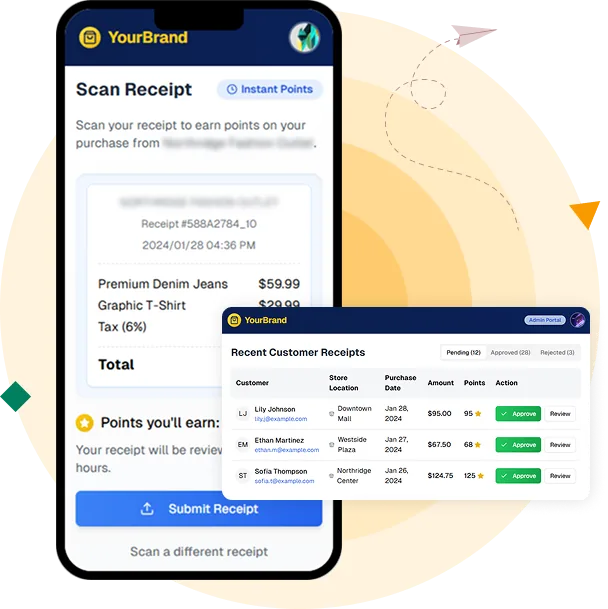
A code on a printed receipt reaches customers right after they buy. Use it to ask for quick feedback, add points for the purchase or share an offer for their next visit.
Offline: the bottom of every printed receipt.
Online: a two-question survey or a points claim page.
4. Events that capture every attendee
Events bring people together in one place, often for a few hours. Codes can handle check-in, contests, session feedback and follow-up content. Event engagement software can connect each scan to the attendee’s profile, so the relationship continues after the event ends.
Offline: badges, booth signs, stage screens and table cards.
Online: check-in, a contest entry or a page with session materials.
5. Scavenger hunts and challenges
Hiding codes around a store, venue or campus turns a visit into a game. Each scan earns points or unlocks the next clue, and completing the set earns a reward. Our article on gamified challenges covers how to design these.
Offline: codes placed at several spots around a location.
Online: a progress tracker, points for each find and a final reward.
6. Direct mail with a personal landing page
Mail pieces can carry a unique code for each recipient. When someone scans, they land on a page that already knows who they are. That makes offers more relevant and responses easy to track.
Offline: postcards, catalogs and letters.
Online: a personal page with a tailored offer and one-step sign-in.
7. Print and outdoor ads with a clear next step
Magazines, posters and bus shelters can drive action when the code offers something specific. A campaign landing page, a short video or an exclusive offer gives passersby a reason to stop and scan.
Offline: print ads, posters and outdoor displays, placed where people wait.
Online: a campaign page with one clear action.
8. Table and counter cards in restaurants and venues
Guests who are seated or waiting have time to scan. A code on a table card can open the menu, join the loyalty program, order another round or leave feedback.
Offline: table tents, counter cards and bar coasters.
Online: a menu with a loyalty sign-up and a points balance.
QR Code Design Tips That Improve Scans
Tell people what they’ll get. A short line such as “Scan to claim your welcome reward” next to the code sets expectations.
Size it for the distance. A code on a poster across the room needs to be much larger than one on a receipt. Test scans from where people will actually stand.
Keep strong contrast and a clear border. Dark codes on light backgrounds scan most reliably. Leave empty space around the edges.
Build for phones. The landing page should load fast and work well on a small screen.
Offer another way in. Print a short web address under the code for people who can’t or don’t want to scan.
Keep Your QR Code Marketing Campaign Safe
QR codes have become a target for scammers. The FTC issued a consumer alert about this in December 2023. It warned that fraudsters cover real codes with fake stickers or send codes by text and email to steal personal information. That makes customers more cautious, so a trustworthy campaign matters.
Build trust
- Send scans to your own recognizable domain
- Print the short web address under the code
- Use secure pages for anything involving personal data
Prevent tampering
- Check public signs regularly for stickers placed over your codes
- Use printed codes rather than removable stickers where possible
- Never ask for passwords or payment details straight after a scan
How to Track QR Code Marketing Campaigns Result
A QR code marketing campaign is only as good as what you can measure. Dynamic codes, which point to a web address you can change later, let you update destinations and see scan data. Adding tracking parameters to each code’s link also shows which placement drove each visit in your analytics.
Metric What it tells you Scans and unique scans How many times, and by how many people, each code was scanned Scan-to-action rate The share of scans that led to a sign-up, purchase or form Results by placement Which locations and materials perform best Repeat engagement Whether customers who scanned come back later Repeat engagement is the number that shows whether your codes are building relationships or just collecting one-time visits.
Making Every Scan Count
A successful QR code marketing campaign links a real-world moment to a meaningful online next step. Give people a reason to scan, and send them somewhere focused and fast. Keep codes safe, and connect every scan to a customer you can recognize. Then each code becomes the start of a relationship.
Turn every scan into a loyal member
Our loyalty software connects with your POS, ecommerce platform and CRM. A scan on a package, sign or receipt can enroll customers and award points on the spot. Every member gets one profile across stores and online, with security that meets SOC 2, GDPR and CCPA requirements.