
A B2B referral software RFP is not a consumer referral RFP with a bigger budget. Your referrers are clients, resellers and partners. Deals take months to close, and several people approve each one. A single referral can be worth more than an entire consumer campaign. The software has to fit that reality.
This post covers what makes B2B evaluations different, six reasons to include NextBee in yours, and the requirements worth adding. If you are new to the process, start with our guide to running a referral program RFP. We also explain why NextBee belongs on your referral software shortlist.
What Makes a B2B Referral Software RFP Different
The core idea is the same, since someone who trusts you introduces someone new. Nearly everything around that introduction changes in B2B.
Consumer referral programs B2B referral programs Who refers Customers and fans Clients, resellers, vendors and partners What a referral is A click and a purchase A lead that becomes a sales opportunity Time to convert Minutes or days Weeks or months Where it is tracked Ecommerce checkout CRM opportunities and closed deals Approval Automatic Sales, finance and sometimes legal Typical reward Credit, discount or gift card Tiered cash bonuses, fees or points Biggest risk Fraud and fake accounts Lost leads, disputes and compliance gaps That is why a tool built for consumer sharing can leave gaps in B2B. The RFP needs to test pipeline integration, approvals and partner experience, not just sharing links. Dedicated partner referral software is built around those needs from the start.
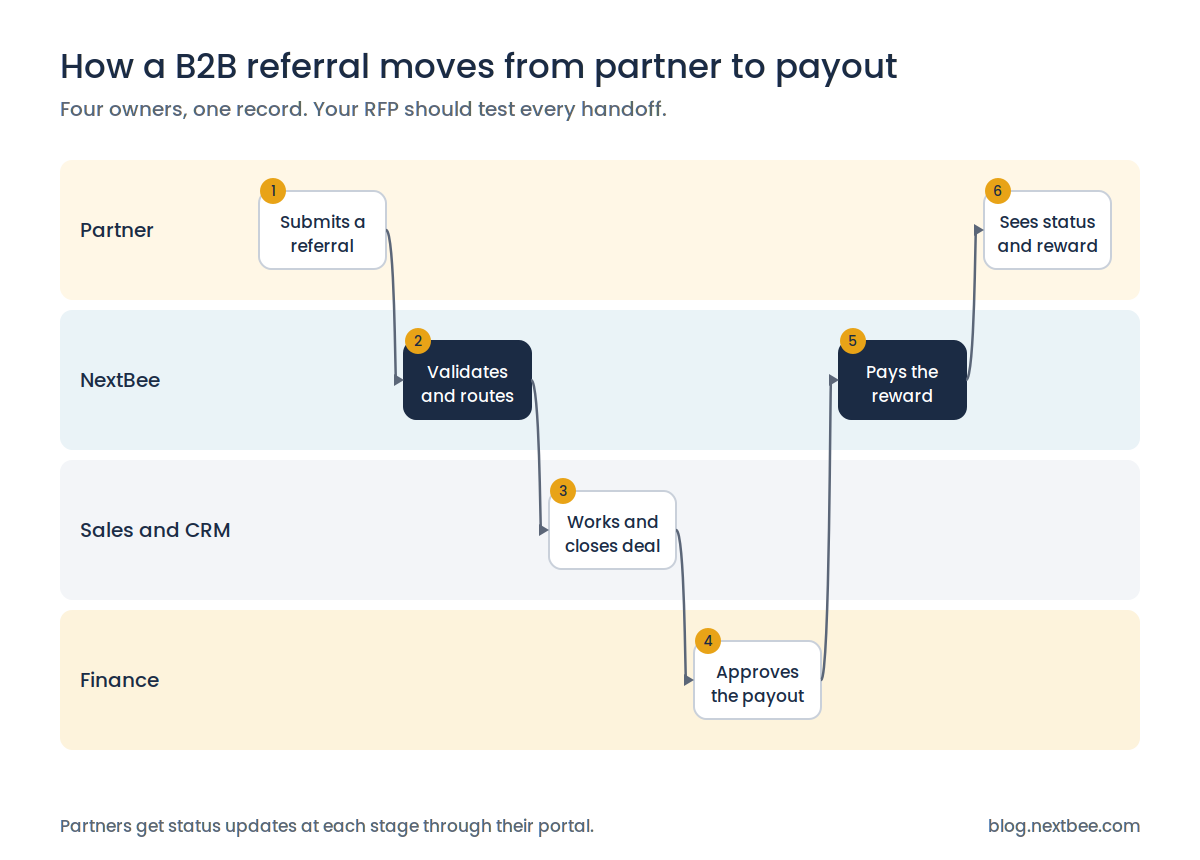
Six Reasons to Include NextBee in Your B2B Referral Software RFP
Each reason ends with the proof to request, so your team can verify it during the evaluation.
1. Referrals land in your pipeline
Partners submit referrals that are validated, tracked in real time and routed to the right sales rep. Everything syncs with Salesforce, HubSpot or Zoho, with lead attribution back to the referring partner.
Proof to request: a referral created in the portal and appearing in your CRM.
2. Quality control before sales sees a lead
Lead scoring, qualification rules and duplicate checks filter referrals automatically. Multi-level approval and deal approval workflows keep sales, finance and partner managers aligned.
Proof to request: a duplicate referral caught and a two-step approval in action.
3. Partners can see their progress
Branded partner portals and dashboards show each referral’s status, with goal notifications and conversion updates. Partners know when their leads convert, which builds trust and repeat referrals.
Proof to request: the partner portal from the partner’s point of view.
4. Incentives that fit B2B deals
Set tiered, rule-based payouts, performance bonuses and milestone rewards. Offer cash bonuses, gift cards or loyalty points in multiple currencies, with automated payouts through gateways like PayPal and Stripe.
Proof to request: a tiered payout rule and the payout it produces.
5. Audit-ready compliance
The platform supports GDPR, SOC 2 and CCPA requirements, with audit trails, consent forms, encryption and role-based access. Rules can ensure only compliant leads proceed, and audit logs are downloadable.
Proof to request: an exported audit log for a single referral.
6. A named team and pricing tied to results
You work with named practice leaders, including our head of referral strategy and client relations director. We provide guided onboarding, training and dedicated support, and pricing is tied to revenue milestones.
Proof to request: the people assigned to your program and how pricing shares risk.
Many B2B referral programs grow into wider partner programs over time. If that is on your roadmap, ask how referrals would connect to a partner enablement platform for training, incentives and co-selling.
Requirements to Add to a B2B Referral Software RFP
Beyond the standard checklist, these requirements separate tools built for B2B from tools adapted for it.
Requirement Why B2B needs it Gate or scored CRM opportunity attribution Rewards depend on deals that close months later Gate Duplicate and ownership rules Two partners, or a partner and a rep, may claim one account Gate Multi-step approvals Sales and finance both sign off on larger payouts Scored Partner portal and status updates Partners lose interest when referrals disappear into a black box Scored Rules by partner type Clients, resellers and agencies often earn different rewards Scored ERP and payout sync Finance needs payouts to match the books Scored Payout totals per partner Supports year-end tax reporting Gate If your clients are also repeat buyers, consider rewarding their loyalty as well as their referrals. B2B loyalty software can run alongside the referral program, so your best accounts are recognized for both.
Tax and Compliance Checks for Partner Payouts
Reporting thresholds changed in 2026
In the United States, the Form 1099-NEC and 1099-MISC reporting threshold rose from $600 to $2,000 for payments made after December 31, 2025. Some states still apply lower thresholds of their own, so confirm the rules for each state you pay into.
Referral fees are restricted in some industries
Healthcare, insurance, financial services and real estate all limit how referral payments can be made. Ask each vendor how its rules can block a payout that your policy does not allow.
General information, not tax or legal advice. This overview of the 2026 Form 1099 changes is a useful starting point for your finance team.
B2B Referral Pitfalls Your Evaluation Should Catch
These problems rarely show up in a demo unless you go looking for them. Build a scenario for each one.
Leads that go cold after submission
If a referral sits unassigned for days, the partner’s credibility suffers. Test how fast a new referral reaches a named rep.
Disputes over who owns the account
Partners and reps both claim credit when rules are unclear. Ask how ownership is decided and recorded.
Rewards that lag the deal
When payouts arrive months after a close, partners stop referring. Check that rewards trigger from the CRM deal stage.
Payouts finance cannot reconcile
Referral rewards that live outside your finance systems create year-end surprises. Ask for the payout export and ERP sync in the demo.
How to Bring NextBee Into Your B2B Referral Software RFP
1Invite us through our RFP page
Share your requirements, partner types and response format.
2Send a real referral scenario
For example, a reseller submits a lead that a rep already owns. We will walk it through the live product.
3Loop in your CRM and finance owners
They can review the integration, approval and payout flow directly with our implementation lead.
4Meet the practice team
Talk with the people who would design and run your partner referral program.
Invite NextBee to your B2B referral software RFP
We will answer in the format your procurement team needs. Then we will show every point in this post in a live demo built around your partners and your CRM.
Frequently Asked Questions
How is a B2B referral software RFP different from a consumer one?
It puts more weight on CRM integration, lead approval, partner portals and payout controls. Consumer RFPs focus more on sharing, fraud and high-volume rewards.
Who should evaluate a B2B referral software RFP?
Include partner or channel managers, sales operations, finance, IT and security, and legal. Each group owns a different part of how referrals become revenue.
Can NextBee route referrals to specific sales reps?
Yes. Qualified referrals are routed to the right person through CRM-integrated workflows, so leads reach sales quickly.
Which CRMs does NextBee integrate with?
NextBee syncs with Salesforce, HubSpot, Zoho and other CRMs, and connects to ERP and marketing automation systems through APIs and webhooks.
Do partner referral payouts need tax reporting?
Often, yes. In the United States, payments that reach the reporting threshold may require a Form 1099. Track totals per partner and confirm your obligations with your tax team.