Most loyalty programs run on a simple exchange. A customer buys something, and the business gives them a reason to come back. That reason is usually points, a discount, or some form of recognition.
Gamification does not replace that exchange in a gamified loyalty program. It adds structure and feedback, so the connection between what a customer does and what they get becomes easier to see.
Where Traditional Programs Fall Short
A conventional loyalty program often works like a punch card. Buy ten coffees, get the eleventh free.
It is easy to understand, which is a real strength. But it is also flat. There is no sense of progress until the very end, no variety in how rewards are earned, and nothing happening between purchases that connects the customer to the brand.
Gamification fills those gaps by making progress visible, varying how rewards can be earned, and adding recognition that is not tied to a discount.
What Changes in a Gamified Loyalty Program
The core mechanics of gamification, covered in more detail in our post on what gamification is and how it works, apply here with a loyalty-specific emphasis.
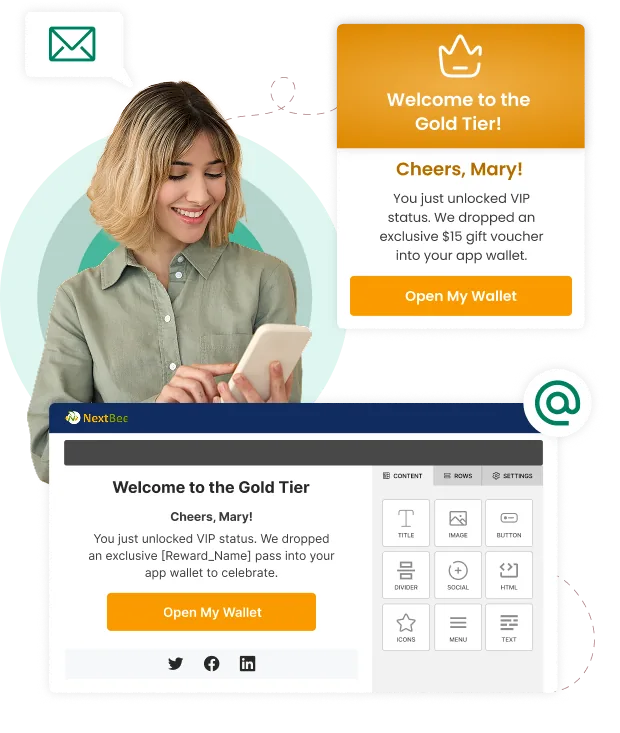
Progress tracking turns an abstract point balance into something concrete. A customer who can see they are 40 points from the next reward has a clearer reason to act than one looking at a number with no context.
Tiers give customers a sense of standing, not just a balance. Bronze, silver, and gold tiers are familiar for a reason. They communicate position at a glance.
Bonus challenges break up the routine. A limited-time offer to earn extra points on a specific category gives regular customers something new without redesigning the program.
Varied redemption is more important than most programs assume. Some customers want a discount. Others prefer early access, an exclusive item, or a donation to a cause. A single reward type serves only part of the base.
Programs often begin with tiers and progress tracking, then expand once they see what their customers respond to.
Why Recognition Matters
Recognition works differently from a discount. A badge or a tier upgrade tells the customer their activity was noticed, independent of any monetary value attached.
That distinction is useful in practice. Recognition costs the business relatively little and can be given more often than a discount can, which makes it a practical way to maintain contact between purchases.
Common Pitfalls to Avoid
When you run a gamified loyalty program, a few issues keep coming up.
Rewards that feel out of reach. If the gap between tiers is too wide, customers disengage before they see progress.
A reward structure that never changes. Offering the same thing indefinitely, with no variation, tends to reduce interest over time.
Rules that are hard to follow. If customers cannot easily tell how to earn or redeem, the added structure works against the program. Simplicity should win over completeness.
Rewards mismatched to the audience. A discount-only program will underperform with customers who prefer access or status.
Keeping a Gamified Loyalty Program Current
Customer preferences shift. Rewards that felt compelling at launch may not feel that way a year later, and new customer segments often respond to different incentives than the ones the program was built around.
Gamified loyalty programs treated as something to refine tend to hold up better than programs set up once and left alone. Adding a new badge, running a seasonal challenge, or expanding redemption options can extend a program’s life without a full rebuild. Managing those adjustments is generally simpler with gamification software than with a hard-coded rewards system.
The purpose of a loyalty program stays the same either way: give customers a reason to return. Gamification makes that reason easier for them to see.