Loyalty programs work in almost every industry. So it’s natural for healthcare providers to ask if they can use one too. The answer is yes, with care. A patient loyalty program can help patients stay engaged, finish key steps in their care and come back when they need to. But healthcare has rules about what you can offer patients. Getting them wrong can bring real penalties.
We explain the key rules in plain language. It shows which program elements are usually fine and which need legal review. Then it covers what makes a patient program work.
This guide is general information about US federal rules, not legal advice. Rules vary by state, payer, and program design. Have qualified healthcare counsel review any patient incentive program before launch.
The short answer
Patient loyalty programs are allowed when they’re designed around the rules. Recognition, points for engagement and small non-cash gifts within federal nominal value limits are the usual building blocks. Cash, referral rewards and anything that could steer patients toward care paid by Medicare or Medicaid need legal review.
Why a Patient Loyalty Program Needs Different Rules
In retail, rewarding customers for buying more is the whole point. In healthcare, that same logic can raise concerns. Regulators want patients to choose care based on need and quality, not on gifts. They also want to prevent overuse of services paid for by government programs.
So the question isn’t whether to reward patients. It’s what you reward, how much the reward is worth and who pays for the underlying care. Patient rewards software with built-in limits and audit trails makes those rules much easier to follow in practice.
The Key Rules in Plain Language
Beneficiary inducement rules. Federal law limits giving Medicare or Medicaid patients anything of value that’s likely to sway which provider they choose for covered care.
Anti-kickback rules. The federal Anti-Kickback Statute bars paying anything of value to win referrals for care paid by federal health programs. This is why referral rewards need special care.
Nominal value gifts. The HHS Office of Inspector General (OIG) has said gifts of nominal value to Medicare and Medicaid patients are generally acceptable. Its 2016 policy statement sets that at no more than $15 per item and $75 per patient per year. Cash and cash equivalents never qualify.
The access to care exception. OIG also finalized a separate exception in 2016. It protects items or services that help patients get care and pose a low risk of harm. It has no fixed dollar limit. OIG has described it as removing barriers to care, such as transportation. Rewards simply for following a treatment plan generally don’t fit this exception.
State laws and commercial payers. Some states have their own anti-kickback or inducement laws that apply to all payers, not just government programs.
Patient privacy. Using patient health information to market to patients can require written authorization under HIPAA. The HHS guidance on marketing explains the rules and exceptions.
Where a Patient Loyalty Program Fits Best
Your risk depends heavily on how the underlying care is paid for. This comparison shows why many practices start with services patients pay for directly.
Cash-pay services Services billed to Medicare or Medicaid Examples: cosmetic dentistry, elective vision care, aesthetics, membership-based primary care Examples: most hospital, physician and pharmacy services for covered patients Federal inducement rules generally don’t apply to cash-pay services, though state laws may Federal inducement and anti-kickback rules apply Points, tiers and service discounts are common Programs usually focus on engagement, recognition and nominal gifts Program can look similar to retail loyalty, with extra care on privacy Every reward type needs a compliance check Many organizations serve both kinds of patients. In that case, design the program for the stricter rules. Or keep the cash-pay program clearly separate, and review how it’s offered.
Patient Loyalty Program Elements: Usually Allowed vs. Needs Review
Here’s how common program elements tend to line up. Each one shows where it’s usually straightforward and where to pause for legal review.
1. Points for engagement actions
Points for a health survey, portal sign-up, reading education materials or updating contact details keep patients involved. None of them reward the use of paid services.
Usually allowed: points that redeem for recognition or nominal non-cash items.
Needs review: points that add up to rewards above nominal limits for government program patients.
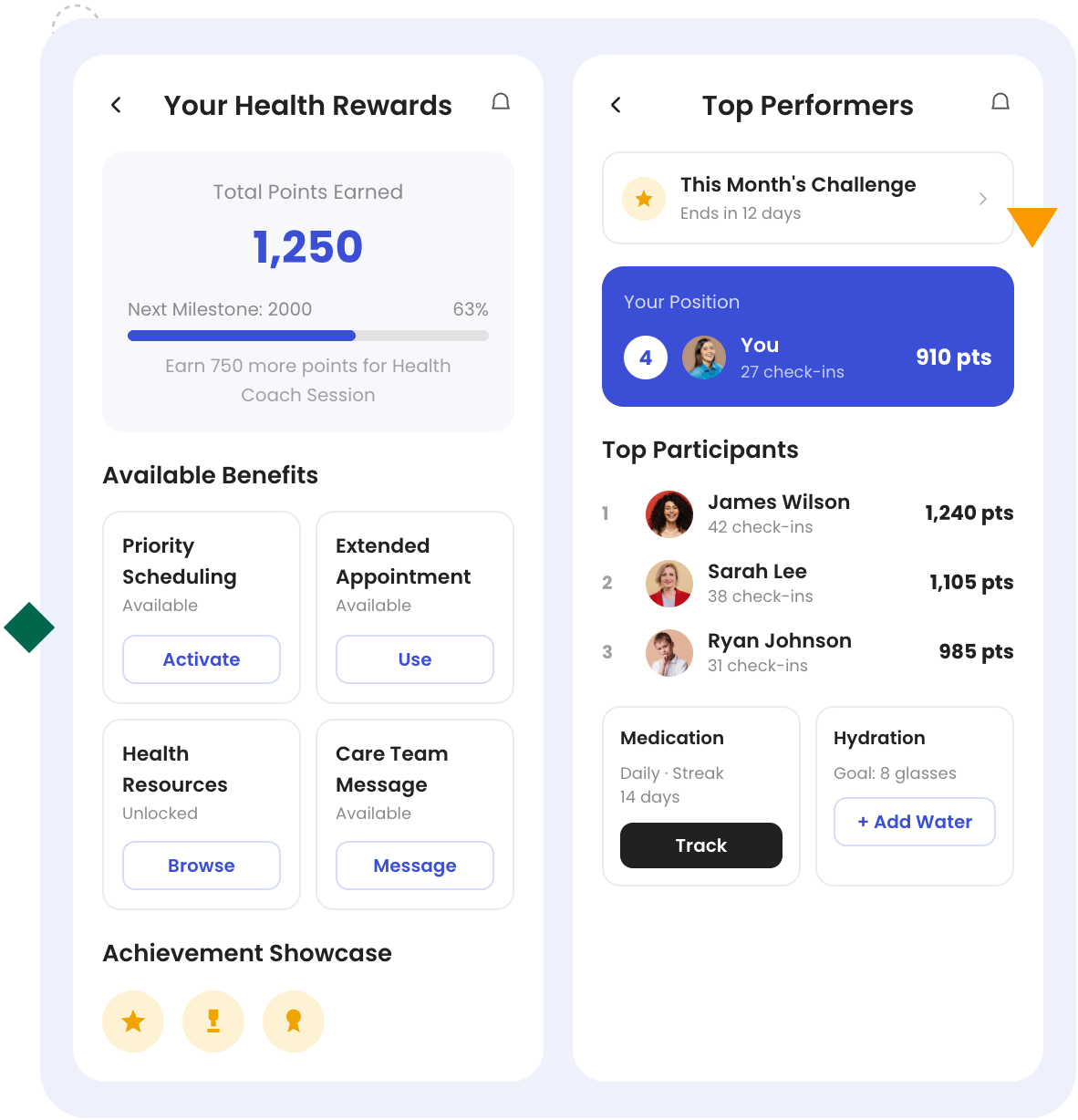
2. Recognition and progress tracking
Badges, milestones, progress bars and thank-you messages cost nothing of monetary value and often motivate patients more than small gifts.
Usually allowed: badges, milestones and personal recognition.
Needs review: public leaderboards that could reveal patient information.
3. Small non-cash gifts
Branded water bottles, health books or small wellness items can reward engagement.
Usually allowed: items within the $15 per item and $75 per year nominal value limits.
Needs review: anything that works like cash, such as checks or general-purpose debit cards.
4. Discounts and membership perks for cash-pay services
Practices offering elective or membership-based services often use tiers, service credits or member pricing, much like a retail program. For these practices, broader customer loyalty software can run points, tiers and rewards alongside patient-specific privacy controls.
Usually allowed: perks limited to services patients pay for themselves, subject to state rules.
Needs review: perks that could influence choices about insurance-billed care.
5. Transportation and access support
Help getting to appointments, such as rides for patients without transport, can fall under the access to care exception. It must be designed carefully.
Usually allowed: support that removes a real barrier to needed care.
Needs review: support offered as a marketing perk to attract new patients.
6. Rewards for adherence or outcomes
Rewarding patients for taking medication, finishing therapy or reaching health goals sounds positive. However, these rewards don’t automatically fit the access to care exception.
Usually allowed: recognition and nominal non-cash items.
Needs review: larger rewards, which may need a specific exception or an OIG advisory opinion.
7. Referral rewards
Rewarding patients for referring friends and family is common in other industries. In healthcare, it’s the element that needs the most caution.
Usually allowed: a simple thank-you, with no reward of value.
Needs review: any reward of value for referrals, especially where government programs pay for care.
What Makes a Patient Loyalty Program Work
Compliance is the starting line, not the finish. Once your program is within the rules, these principles decide whether patients use it.
Reward engagement, not services
Tie rewards to actions like completing forms, using the portal or finishing education. That keeps the program focused on health habits rather than volume of care.
Lead with recognition
Progress tracking and personal thank-yous can motivate more than a small gift, and they carry far less regulatory risk.
Make it effortless
Enroll patients through the portal or at check-in. Show their progress in one place, and remind them on the channel they prefer.
Respect privacy at every step
Keep health details out of public features, get consent for communications and store reward data securely.
Loyalty also works best alongside good patient acquisition. A patient acquisition platform can bring new patients in, while the loyalty program keeps them engaged afterward. For where patient engagement technology is heading, see our piece on the next evolution of patient engagement.
Patient Loyalty Program Compliance Checklist
- Identify which patients are covered by Medicare, Medicaid or other government programs
- List every reward type and its value, per item and per year
- Exclude cash and cash equivalents
- Decide how referral recognition will work, if at all
- Check state laws in every state where you operate
- Confirm HIPAA authorization and communication consent requirements
- Have healthcare counsel review the program, and document the review
Building a Patient Loyalty Program That Lasts
A well-designed patient loyalty program can strengthen engagement, improve follow-through on care and keep patients connected to your practice. The key is to design it around the rules from day one. Reward engagement and lead with recognition. Keep gifts within limits, and review anything involving referrals or larger rewards with counsel.
Design a patient loyalty program that works within the rules
Every practice and health system has different patients, payers, and goals. Tell us what you’d like your program to achieve. Our team will help you design patient engagement and rewards that fit your needs, with limits and audit trails built in.