Sports fans already play along. They argue over lineups, predict scores with friends and quiz each other on history nobody else remembers. Gamification in sports takes that instinct and gives it a home inside your app, your stadium and your season. Done well, it turns fans who watch into fans who take part. It also gives your team first-party data and sponsor value along the way.
This guide covers the three mechanics teams rely on most: predictions, trivia and challenges. You’ll see where each one fits on game day and across the season. Then we cover the rewards fans want and the rules to get right before launch.
How Gamification Affects Sports Fan Engagement
Gamification in sports works best when it follows the rhythm of the game. Predictions build anticipation before kickoff, trivia fills the breaks and challenges reward showing up, week after week. Tie all three to points, leaderboards and rewards fans care about, and your engagement no longer ends at the final whistle.
Why Gamification in Sports Works
Three things make sports an unusually good fit for game mechanics.
Fandom is already competitive. Fans want to prove they know more than the person in the next seat. A leaderboard just makes it official.
Seasons have a built-in rhythm. Fixtures, breaks, playoffs and the offseason give you natural moments to launch, reset and reward.
Every play creates data. Each prediction, answer and check-in tells you something about a fan’s interests, which feeds ticketing, merchandise and sponsor decisions.
The catch is that engagement tends to fade between games and after the season ends. Sports fan engagement software helps fill those gaps. It runs predictions, trivia, streaks and rewards from one place, tied to a single profile for each fan.
The Three Core Mechanics of Gamification in Sports
Predictions Trivia Challenges Best moment Before kickoff Breaks and between games All season What fans get Bragging rights and suspense A chance to show knowledge Progress and recognition What the team gets Repeat app visits every game Interest data and sponsor slots Attendance and habit building Effort to run Low once automated Medium, needs fresh questions Low to medium Prediction games
Predictions give fans a stake in every game before it starts. Common formats include final score, first scorer, player of the match and season-long pick’em leagues. Open predictions a day or two before the game, lock them at kickoff and post results right after the final whistle. Leaderboards filtered by section, region or ticket tier make the competition feel personal.
Predictions also work as second screen engagement. Fans watching at home or in the stands keep your app open to track their picks as the game unfolds.
Trivia
Trivia rewards what fans already love: knowing things. Run live trivia during breaks in play, weekly quizzes on club history and player-stat challenges between games. Mix difficulty levels so new fans can win too. Also, keep questions fresh. Recycled questions are the fastest way to lose your most loyal players.
Trivia rounds are also natural sponsor inventory. A branded “quiz of the week” gives partners a visible, measurable way to reach fans.
Challenges
Challenges reward behavior over time. Examples include attendance streaks, app check-ins on consecutive days, in-stadium scavenger hunts and content challenges, such as sharing a game-day photo. Progress bars and badges show fans how close they are to the next milestone, which keeps them coming back.
Game-Day Timeline: Where Each Mechanic Fits
On game day, gamification in sports works like a well-paced broadcast. Each moment has a job.
2 days before
Predictions open, with a reminder to fans who played last week.
Gates open
Arrival check-ins, early-bird challenges and in-stadium scavenger hunts.
Kickoff
Predictions lock. Fans follow their picks live.
In play
Quick polls, such as “Who’s your player of the half?”
Halftime
Live trivia with a sponsor-branded prize, shown on the big screen.
Final whistle
Results post, leaderboards update and winners are notified.
Next morning
Recap, badges earned and a teaser for next week’s predictions.
Inside the venue, an event engagement platform can run check-ins, live polls and big-screen trivia. Every interaction ties back to each fan’s profile.
Keeping Fans Playing All Season, Including the Offseason
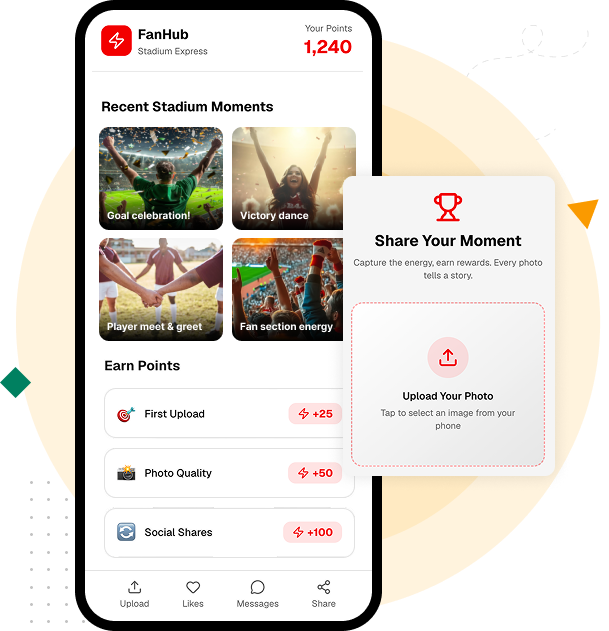
The hardest part of fan engagement is the quiet stretch. So plan gamification in sports across the whole year, not just on game day.
Preseason
Roster trivia, season-long pick’em sign-ups and early renewal challenges.
Regular season
Weekly predictions, halftime trivia and attendance streaks.
Playoffs
Bracket challenges and bonus points for every round.
Offseason
Draft and signing predictions, history quizzes and daily check-in streaks.
A year-round gamification calendar.
The offseason is where many team apps lose their audience. Daily streaks, history trivia and transfer predictions give fans a reason to open the app when there’s no game to watch. A mobile app engagement platform can automate those prompts and bring back fans whose activity starts to drop.
Where Sponsors Fit In
Gamification in sports creates sponsor inventory that’s easy to measure. A branded trivia round, a sponsored prediction contest or a partner challenge, such as visiting a sponsor’s stand, gives partners more than logo placement. They get verified numbers on how many fans saw, played and completed each activation. That data makes renewal conversations much easier.
Keep sponsor activations relevant to the game, though. Fans welcome a quiz presented by a partner. They tune out when every screen feels like an ad.
Rewards Fans Actually Want
Points and leaderboards only work if they lead somewhere. The most effective rewards connect fans to the team rather than just discounting products.
Experiences. Pre-game sideline access, meet-and-greets or watching warmups from the field.
Recognition. Badges, big-screen shout-outs and status levels that others can see.
Merchandise. Official gear redeemed with points from a team rewards store.
Access. Early ticket windows, seat upgrades and members-only content.
Experiences and recognition often cost the team little but mean a great deal to fans. For more on the mechanics behind points, badges and levels, see our article on how gamification drives business growth.
How to Measure Gamification in Sports
Track results that connect play to revenue, not just participation.
- Weekly active fans: how many fans play at least once per game week.
- Return rate: the share of players who come back the following week.
- Offseason activity: engagement between the last game and the next season.
- Profile growth: new fan profiles and interests captured through play.
- Revenue links: ticket renewals, merchandise purchases and concessions among players compared with non-players.
- Sponsor results: views, plays and completions for each sponsored activation.
Legal Rules for Gamification in Sports
Keep contests free to enter
Prize contests that require payment to play can raise legal issues in many places. Offering a free way to enter is the usual safeguard.
Publish clear official rules
State eligibility, how winners are chosen, prize details and dates for every contest.
Plan for young fans
Many fans are children. Collecting their data brings extra obligations, such as COPPA in the US.
Keep games separate from betting
Free prediction games are not wagering. Keep them clearly distinct from any betting partnership.
Contest, sweepstakes and privacy rules vary by country and state. Review your plans with legal counsel before launch.
Bringing It All Together
Gamification in sports is at its best when it feels like part of being a fan, not a marketing layer on top. Start with one mechanic that fits your biggest gap, such as predictions for game-week traffic or streaks for the offseason. Then connect it to rewards fans care about, and measure how players behave compared with everyone else.
Give fans prizes worth playing for
Our rewards platform lets fans turn their points into merchandise, experiences and digital rewards from a catalog you control. Prizes are delivered automatically the moment a fan qualifies. Built-in fraud checks block duplicate entries and fake completions, so leaderboards stay fair, and you can see reward spend by contest, sponsor and season in one view.
Tell us which fan games you’re planning, and we’ll show you how the rewards side would run.
Frequently Asked Questions
Are sports prediction games considered gambling?
Free-to-play prediction games with prizes are generally treated differently from betting, because fans don’t stake money. The details depend on how entry works and where fans live, so have counsel review your contest structure and official rules.
Do teams need their own app to use gamification?
No, though an app makes it easier. Many teams start with web-based games linked from email, social media and stadium screens. An app adds push notifications, wallet passes and streaks that keep fans coming back.
How can teams fund prizes for fan games?
Sponsors often fund prizes in exchange for branded activations. Teams can also use low-cost rewards, such as recognition, early access and experiences, which fans value highly.