AI pilots are surging, with Microsoft’s 2025 blog citing over 1,000 customer transformations and Salesforce’s Agentforce redefining autonomy. For loyalty programs, NextBee applies these trends through low-risk pilots, delivering efficiency and 40-60% engagement lifts. This post explores 2025 trends from Fortune’s report on pilot failures to Google’s real-world use cases, offering lessons on successful adoption, common pitfalls, and how NextBee integrates them for B2B success.
Key Trends in Agentic AI and Pilots
Autonomous Campaigns and Efficiency Gains
Salesforce’s 2024 Agentforce boosts scale, per their announcements. Trends include real-time adjustments, as in Governing’s 2025 Pennsylvania pilot saving 95 minutes daily.
- Integration with data for insights.
- CSA’s 2025 guide on minimizing risks in pilots.
- 923’s 2025 case studies: Walmart and BMW turning pilots into results.
Challenges and Failure Rates
MIT’s 2025 report notes 95% of GenAI pilots failing due to stalls, emphasizing the need for structured approaches like NextBee’s.
Emerging Use Cases
Before launching your next AI engagement pilot, review the milestone cadence diagram below to see how our feedback and validation loops prevent unverified model drift.
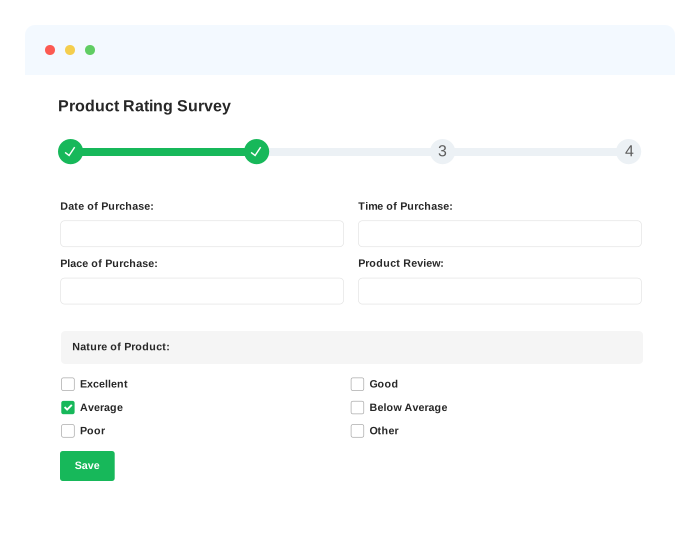
Milestone cadence connecting closed-loop customer feedback, human-in-the-loop QA gates, and production rollout across your brand. Google’s 2025 use cases show AI enhancing work across sectors.
Applying Trends to Loyalty Programs
NextBee’s Pilot Framework
4 phases align with Microsoft’s transformations, incorporating AI for optimization.
To ground your AI engagement pilots in verified customer sentiment and measurable revenue outcomes, pair our closed-loop customer feedback and survey engine with our executive analysis on how AI agents revolutionize B2B customer engagement.
- ROI analysis and feedback for success.
- UCLA’s 2025 initiative: 68 pilots offering AI lenses.
- Koat.ai’s 2025 guide on DHS pilots.
Overcoming Adoption Barriers
Address stalls with extensions and data ownership.
Future Outlook for 2025
GovTech’s 2025 Pennsylvania report highlights time savings.
Lessons from Industry Leaders
Success Stories and Insights
CMU’s 2025 Shapiro announcement on OpenAI pilots.
- Ömer Yilmaz’s LinkedIn poston integrations.
- @KieranGilmurray on X on AI market growth to $1339B by 2030.
Key takeaways: Learn from pilots to drive efficient, transformative loyalty strategies with NextBee.
Enterprise AI Pilot Governance, Unit Economics, and Rollout Cadence
Apply these evaluation scorecards, cost-per-action tables, and 60-day launch timelines to move your AI engagement pilots from sandbox testing into audited production.
How should enterprise leaders score an AI customer engagement pilot before authorizing production scale?
Score every AI pilot across three weighted gates before authorizing production budget: CRM schema accuracy (40%), measurable conversion lift over control cohorts (35%), and human-in-the-loop compliance adherence (25%). Require a minimum composite score of 85 out of 100 across a 30-day holdout test before expanding agent autonomy to your full customer database.
Enterprise AI Pilot Production Readiness ScorecardWe evaluate your pilot cohorts against three weighted readiness criteria so our deployment team only scales workflows that beat your baseline control group.
Pilot Evaluation Gate Weight Minimum Pass Threshold Governance Escalation Action CRM and Event Schema Integrity 40% 99% field completeness on customer identity and consent tags Block automated outreach for any record missing opt-in timestamps Incremental Conversion Lift 35% 12% or higher lift in repeat orders or event registrations vs. holdout Retrain offer selection rules if control delta falls below 12% Policy and Guardrail Adherence 25% Zero unauthorized discount codes or off-brand message generations Enforce deterministic template locks on all reward value fields Readiness scores measure sandbox cohort behavior under those assumptions and does not authorize production spend without sign-off from your finance team. event and fan engagement pilot governance →What unit economics separate profitable AI engagement agents from costly experimental sandboxes?
Separate profitable AI agents from costly experiments by tracking net margin generated per 1,000 automated interventions, capping reward plus inference overhead below 15% of incremental order value, and measuring analyst hours saved per campaign. Production-grade agents must pay back their seat and compute costs within 60 days through verified retention lift.
AI Engagement Pilot Unit Economics Comparison TableOur platform tracks cost per autonomous intervention alongside incremental gross margin so your leadership team can verify net ROI before expanding seat licenses.
Economic Metric Unscoped Sandbox Pilot Governed Production Agent CFO Approval Gate Cost per 1,000 Interventions Unbounded token and manual QA rework costs Fixed workflow tier with deterministic offer caps Keep total platform plus reward cost below 15% of incremental GMV Campaign Launch Turnaround 3 to 4 weeks of custom prompt and script engineering 48 hours using pre-validated loyalty and promo skills Cut marketing operations setup labor by at least 50% Incremental Retention Lift Unmeasured due to missing holdout control groups 15% to 28% verified lift over 10% static holdout cohort Audit net margin attribution at Day 30 and Day 60 Unit cost models depend on transaction volume and margin inputs supplied by your finance team and are not a forecast of guaranteed net profit. loyalty unit economics and value attribution →How do you transition an AI promotional pilot into production in 60 days without data leaks?
Transition your AI pilot in four 15-day stages: sanitize CRM training attributes, run shadow-mode offer scoring against historical orders, launch a 10% live split test with hard budget caps, and graduate winning rules to full production. This phased cadence eliminates hallucinated offers while proving incremental conversion lift to your executive team.
60-Day AI Promotional Pilot to Production TimelineWe guide your marketing and data teams through four 15-day milestones so our agentic promotional rules graduate safely from shadow mode to full production.
Step 01 · Days 1 to 15 · Data EngineerStage 1: Data SanitizationStrip raw PII from model prompts and bind reward eligibility strictly to verified CRM tier and consent attributes.Step 02 · Days 16 to 30 · Growth LeadStage 2: Shadow ScoringRun our offer recommendation agent in silent shadow mode against live store traffic to validate margin compliance.Step 03 · Days 31 to 45 · Lifecycle ManagerStage 3: Split-Test CanaryActivate automated triggers for a 10% customer canary cohort while holding a 10% control group on static rules.Step 04 · Days 46 to 60 · VP MarketingStage 4: Production ScalePromote verified high-margin rules to 100% of eligible segments with automated daily budget circuit breakers.Timeline progression requires timely API webhook configuration supplied by your technical team and does not modify your core enterprise security policies. promotional campaign automation and budget controls →Apply these trends—book a demo at web.nextbee.com/demo!