A decision tree can help to increase the employees learning activities as the tree-based methods have empowered predictive models with stability, high accuracy, and easy interpretation. Employees can easily make better decisions when there are many different courses of action that they can choose from.
The Lifelong Learning Innovation Growth and Human Capital Tracks in Europe, has been stimulating employee-driven entrepreneurship and innovation performance, following at least two routes directly through task-related measures such as problem demand, or indirectly through stimulation of specific activities such as innovative work behavior, through competency development programs that focuses on capital, employee engagement program, and human development programs.
These investors can follow different decision-making routes when they aim to stimulate employee-entrepreneurship and innovation. Whenever persons choose to put these decision-routes into a broader LLL perspective it is important for us to connect to the work that was carried out by researchers and follow the results they found. The LLL decision-maker who wants to strengthen entrepreneurship and employee-driven innovation can invest in three LLL areas. They should invest in skills development and bridging the difference between low and high engagement in innovative behavior by employees in sampled companies. This can partly be explained as employees start using soft skills, such as belief in the creative ability, the importance attached to social networks and opportunity competence.
There has been a positive effect that was noticed, since the entrepreneurship education programs on which entrepreneurial intentions have been implemented. These results have clearly indicated that it is good to invest in organized learning activities in relation to entrepreneurship development. Entrepreneurship education scholars seem to believe that entrepreneurs are mainly made rather than born.
The LLL investor decision tree with the output of previous research and insights has helped with the Employment engagement program and (Enterprise LLL) are integrated and used. A conclusion was drawn from the study of many European enterprises was that lifelong learning in high enterprises- as a requirement for high performing work systems should be addressed through 3 interrelated areas, such as skills development, work design and the organization of work and learning systems and incentives.
There are companies that have limited budgets for the development of such skills among their workers training programs, so they are encouraged to invest in a few loyal workers, use an employee referral program and make an effort to encourage the trained workers to tell the other employees about what they have learned. Some companies have invested in the soft skills of their highly-valued employees, whenever the employee shows interest in learning and improving their own capabilities.
Having an employee referral program in a company where the decision-making tree operates, is very important. Employees will know where to go, and what to do whenever they want to improve their own capabilities and income. Managers will constantly have high skilled workers, in order to improve the productivity of their company.
To budget your workforce training incentives and compare branching logic models, review our enterprise platform pricing and deployment tiers alongside our foundational guide on decision tree applications in modern business decision-making so your L and D team targets every skill gap accurately.
Making decisions about how to use skilled employees to increase the income of a company that has an employee referral program will become much easier to handle when the LLL method is chosen.
Look at the architecture breakdown below to see how our decision tree engine routes each employee learning assessment into targeted skill paths and recognition milestones.
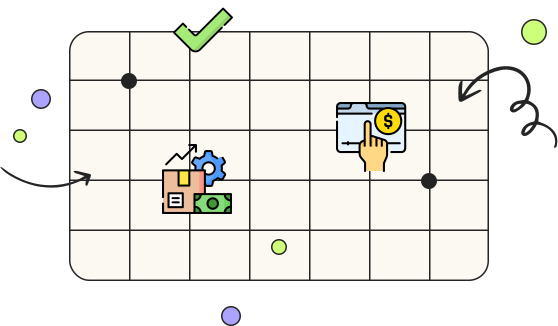
Finance Gate: Role diagnostic score, adaptive training track assignment, and verified competency grant approval. The investment in soft skills is valued by employees as well, but managers should be careful when they choose employees for these programs, the individual employee should be showing interest in learning. Whenever employees don’t care about improving their own skills, money can be easily wasted on persons who are not learning, because they are not interested in being more productive.
Companies have invested in formal training programs and improve skills that explicitly and directly contribute to new business formation and financial performance. Skills that develop and stimulate employee-driven innovation and entrepreneurship depend on informal learning mechanisms, such as teamwork and becoming role models, etc.
When increased competence is rewarded and more opportunities are provided companies grow and develop.
We, at NextBee, offer you a robust platform that boosts the adoption of core company values and encourages employees to complete tasks and training. With its suite of employee engagement tools, it ensures that your employees are focused and their productivity remains high. Connect with us today!
Employee Learning Decision Trees, Survey Action Planning, and ROI
Use these decision rules, unit economics models, and rollout timelines to connect employee skill diagnostics with measurable workplace performance.
How do decision trees automate employee survey action planning and personalized learning paths?
Route post-survey and post-quiz responses through conditional branching rules that match each employee's skill gap or engagement blocker to a 14-day micro-learning track. When a team member scores below 75% on a technical competency check, assign a targeted coaching module and schedule an automated 30-day manager review.
Adaptive Employee Learning Decision Tree MatrixWe automate branching logic across your LMS and pulse surveys so every employee receives role-specific skill modules.
Diagnostic Score 90% to 100% Fast-track employee to peer mentor certification and award 500 mastery points. Diagnostic Score 75% to 89% - Assign two 8-minute scenario micro-modules
- Schedule automated 14-day knowledge re-check
- Credit completion badge to HRIS profile
Diagnostic Score Under 75% Enroll employee in guided coaching track and notify frontline supervisor for 1-on-1 shadowing. Pulse Survey Flags Career Stagnation Prompt cross-departmental stretch project options and mentorship matching within 48 hours. Branching thresholds operate on LMS assessment data supplied by your L and D team and do not replace formal performance evaluations. employee survey action planning software →How do you calculate unit economics for employee learning stipends and volunteer matching grants?
Track cost per certified competency and compare 12-month retention between active learners and non-participating cohorts. Allocating $75 to $150 per employee in combined learning completion rewards and dollars-for-doers volunteer grants typically reduces voluntary turnover by 18% to 26%, saving $4,200+ in replacement recruiting costs per retained role.
Workforce Learning and Volunteer Grant Unit EconomicsOur finance ledger tracks per-employee stipend burn, volunteer hour verification, and turnover savings across every department.
Workforce Program Track Annual Budget Per Employee Verified Completion Rate 12-Month Turnover Reduction Role-Based Learning Path + Points $65 Reward and Badge Allocation 78% On-Time Certification 19% Lower Voluntary Attrition Dollars-for-Doers Volunteer Grants $100 Cap at $10 per Verified Hour 64% Team Participation 24% Higher Engagement Score Combined Skill + Community Track $150 Bundled Annual Cap 84% Multi-Quarter Activity $4,800 Recruiting Cost Saved per Role Turnover savings and completion figures are illustrative under those assumptions and are not a forecast of guaranteed HR cost reductions. employee volunteer and workplace grant software →How do you prevent gaming and rapid-click fraud in gamified learning quizzes and seasonal challenges?
Enforce minimum module dwell-time gates, randomized question banks, cooldown intervals between quiz retries, and supervisor verification on high-value certifications. Roll out your fraud-protected decision tree in four structured weeks so reward budgets only fund verified skill mastery.
4-Week Fraud-Protected Learning Rollout TimelineWe configure dwell-time timers, randomized quiz pools, and velocity blocks so your training budget rewards genuine skill growth.
Step 01 · Days 1 to 7 · L and D ArchitectWeek 1: Competency Tree MappingMap job roles, prerequisite badges, and branching quiz thresholds.Step 02 · Days 8 to 14 · Platform OpsWeek 2: Anti-Gaming GuardrailsEnable 180-second minimum video dwell times and 24-hour retry cooldowns.Step 03 · Days 15 to 21 · IT IntegrationWeek 3: HRIS and LMS Webhook SyncConnect Workday or Cornerstone completion webhooks to point ledgers.Step 04 · Days 22 to 28 · HR ControllerWeek 4: Pilot Cohort AuditAudit completion velocity logs and release automated reward catalogs.Anti-gaming controls depend on event timestamps supplied by your LMS and do not authorize changes to statutory compliance training rules. year-round gamified challenge and quiz engine →